

What Second Graders Learn in Math: A Guide for NC Parents 🧮
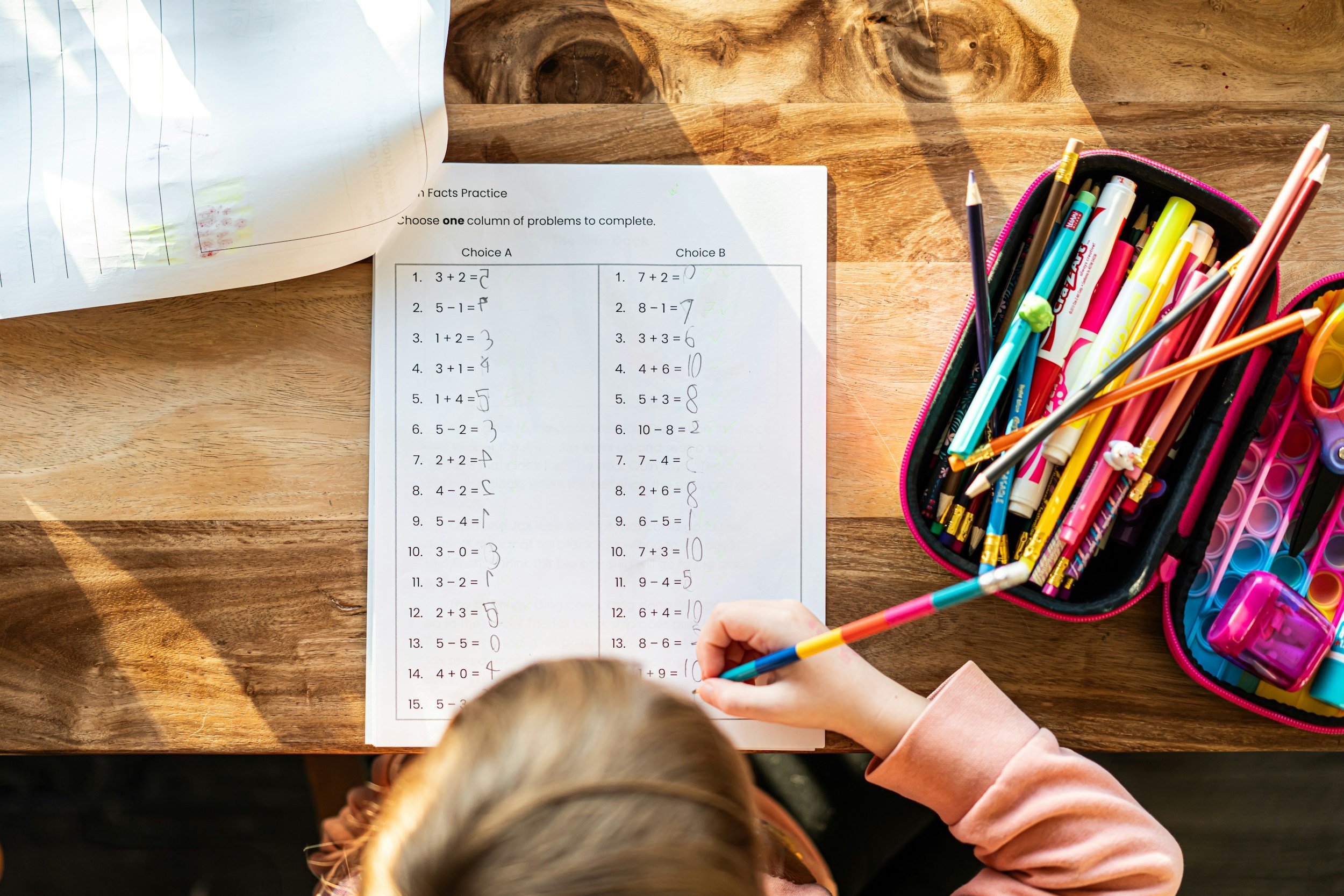
Second grade math skills take a big leap from first grade, as your child moves from simple addition into fluent calculation, place value up to 1,000, and their first taste of geometry and fractions. It can feel like a lot of new vocabulary and skills all at once, especially when you are trying to help with homework. This guide breaks down exactly what NC second graders are expected to learn in math class this year.
Whether your child is breezing through worksheets or struggling to keep up, understanding these building blocks helps you support them at home. Below we cover addition and subtraction fluency, place value, measurement and money, shapes, and how to know if extra help might be useful.
Addition and Subtraction Fluency 🔢
By the end of second grade, students are expected to add and subtract within 20 fluently, meaning quickly and mostly from memory rather than counting on fingers. This fluency frees up mental space for more complex problems later on. Teachers also introduce two step word problems within 100, so kids practice applying math to real situations.
Second graders also work with odd and even numbers, learning to group objects into pairs to decide which category a number falls into. They begin representing repeated addition as rectangular arrays, an early building block for multiplication. These skills combine number sense with early algebraic thinking.
Place Value and Numbers to 1,000 🔟
Place value becomes a major focus in second grade as students learn to read, write, and represent numbers up to 1,000 in several ways, including standard form, word form, and expanded form. They also practice skip counting by 5s, 10s, and 100s, which builds a strong foundation for later multiplication.
Comparing three digit numbers using greater than, less than, and equal to symbols is another key skill this year. Students also learn to add and subtract within 1,000 using strategies based on place value, not just standard algorithms. This helps them understand why the math works, not just how to do it.
Measurement, Time, and Money 📏
Second graders start measuring length using tools like rulers, yardsticks, and meter sticks, and they compare the same object using different units. They also estimate lengths before measuring, which builds number sense alongside measurement skills.
Telling time to the nearest five minutes and reading both digital and analog clocks are expectations for this grade. Money skills also expand, with students solving word problems involving dollars and cents. These real world applications make math feel practical and relevant.
Shapes and Early Geometry 🔷
Second graders build on earlier shape knowledge by identifying and describing shapes based on their number of sides, angles, and faces. They work with both two dimensional and three dimensional shapes, comparing and sorting them by their attributes.
Partitioning shapes into equal parts, such as halves, thirds, and fourths, introduces early fraction concepts well before students see the word fraction in a textbook. Recognizing that equal shares of the same whole can look different depending on how they are divided is an important and sometimes tricky idea at this age.
How to Know if Your Child Is On Track 📈
Every child develops at their own pace, but there are some general signs that can help you gauge how your second grader is doing in math. If your child can add and subtract within 20 quickly, understands place value with three digit numbers, and can tell time and count money with some independence, they are likely on track for grade level expectations.
For a full breakdown of skills by category, the NC DPI 2nd Grade Math Parent Guide is an excellent resource straight from the state. If you notice your child consistently struggling with these concepts or avoiding math homework altogether, it may be worth exploring extra support.
Ready to Build Strong Math Foundations? 🎯
A little extra support in second grade can prevent small gaps from turning into bigger struggles later on. Our tutors specialize in meeting kids exactly where they are and building confidence alongside skills.
Why Early Elementary Support Pays Off Later 🌟
Second grade math sets the stage for multiplication, fractions, and more advanced problem solving down the road. Getting a strong start now means less stress and more confidence in the years ahead.
