

What Third Graders Learn in Math: A Guide for NC Parents ✖️
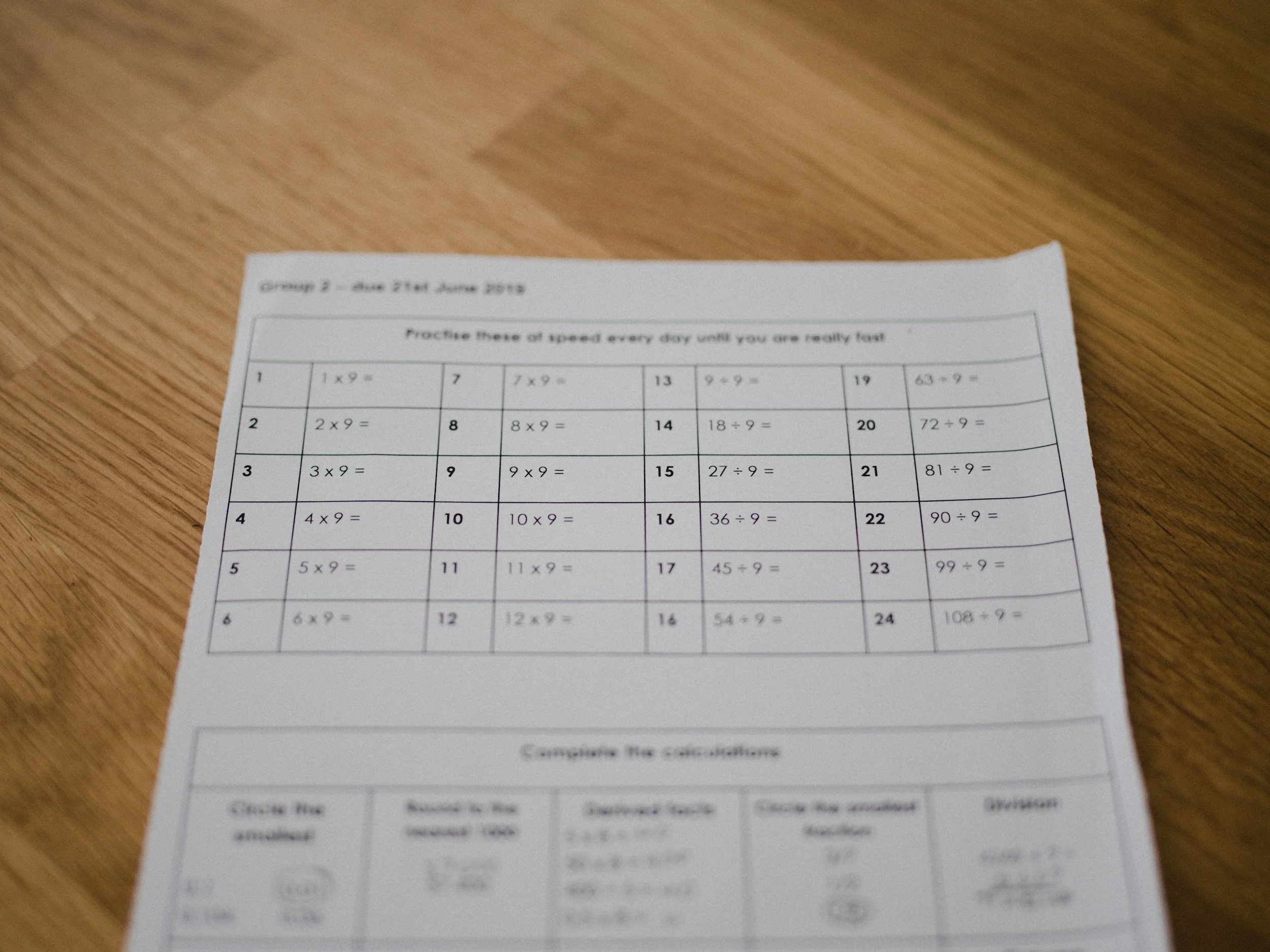
Third grade math introduces some of the biggest shifts kids will see in elementary school, especially once multiplication and division take center stage. If your child is bringing home worksheets that look a lot harder than last year’s, you are not imagining things. Third grade builds the foundation for nearly everything that comes after it in math.
This guide breaks down what North Carolina third graders are expected to learn in math this year, in plain language. You will also find a few signs that can help you tell whether your child is on track or could use some extra support.
Multiplication and Division Fluency ✖️
Third grade is when multiplication and division really take off. Kids are expected to know their facts up to 10×10 and use them quickly, without counting on their fingers.
They also start connecting multiplication and division as opposite operations. This means understanding that if 6 × 7 = 42, then 42 divided by 7 = 6, which helps kids solve problems more flexibly.
Fractions as Numbers 🍕
This is the year fractions stop being just about pizza slices and start being treated as real numbers with their own value on a number line. Kids learn to compare fractions, find equivalent fractions, and understand what the numerator and denominator actually mean.
For a lot of kids, this is the first time math feels abstract instead of concrete. Extra practice with visuals like fraction strips or number lines can make a big difference here.
Area, Perimeter, and Shapes 📐
Third graders start measuring area and perimeter of rectangles, learning to count square units and eventually multiply length by width. They also explore different quadrilaterals and describe their attributes, like sides and angles.
These skills connect directly to the multiplication facts they are practicing, so kids who are still shaky on their times tables may find this section extra challenging.
Rounding, Word Problems, and Measurement 📏
Rounding numbers to the nearest ten or hundred becomes an important skill this year, along with solving multi-step word problems that combine addition, subtraction, multiplication, and division. Kids also work with measurement units like liquid volume and mass, and learn to read and interpret graphs.
Word problems in particular can trip kids up, not because they cannot do the math, but because they struggle to figure out which operation to use. Practicing how to break down a word problem step by step is one of the most useful things you can do at home.
How to Know if Your Child Is On Track 📈
Every child develops at their own pace, but there are a few signs that can help you gauge how your third grader is doing. If they know their multiplication facts fairly well, can explain a fraction in their own words, and can solve a two-step word problem with some guidance, they are likely right where they need to be.
For a full breakdown of the specific skills North Carolina expects third graders to master, you can check the NC DPI 3rd Grade Math Parent Guide, which outlines exactly what your child’s teacher is working toward this year.
Give Your Child a Strong Start in Third Grade Math 🧮
Multiplication, fractions, and word problems can be a lot to take in during one school year. A little one-on-one support can help your child build confidence instead of falling behind.
Why Early Elementary Support Pays Off Later 🌟
The habits and confidence kids build in third grade math tend to carry forward into every grade that follows. Getting extra support now can prevent small gaps from turning into bigger struggles later on.
