

What Seventh Graders Learn in Math: A Guide for NC Parents 📗
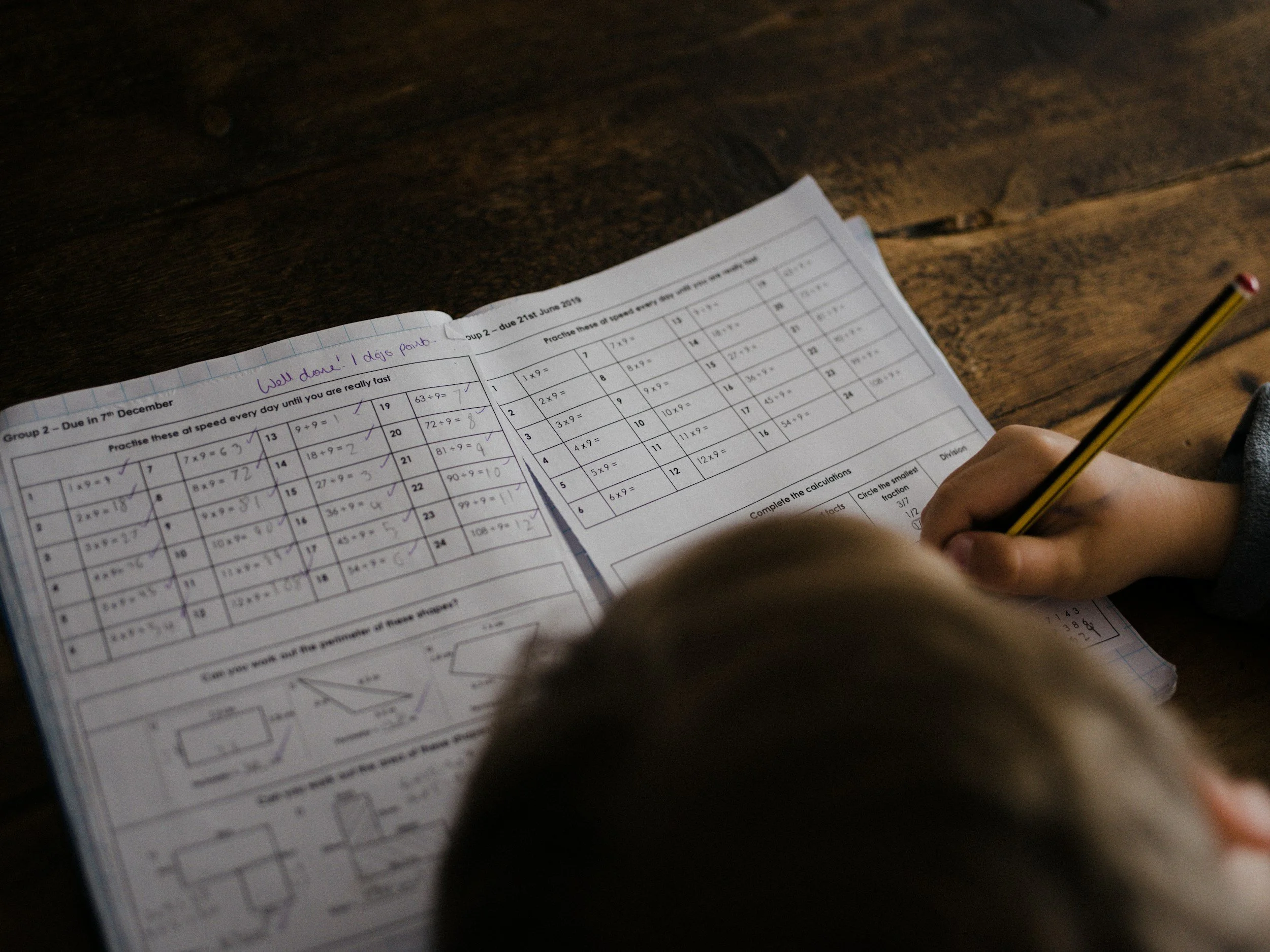
Seventh grade math brings bigger, more abstract ideas as students move deeper into middle school. Concepts like proportional relationships, negative number operations, and multi-step equations start to feel less like arithmetic and more like true algebraic thinking. For many NC parents, this shift can make it harder to know exactly what your child should be learning and how to help at home.
The good news is that North Carolina’s math standards lay out a clear path for what students should master in seventh grade. Understanding these expectations can help you spot when your child is thriving and when they might need a little extra support. It can also make homework time feel less like guesswork for both of you.
In this guide, we will walk through the core seventh grade math topics covered in NC classrooms, along with practical ways to support your child’s learning at home. We will also point you to an official NC parent guide with more detail on each skill. By the end, you will have a clearer picture of what seventh grade math success looks like.
Ratios and Proportional Relationships 📊
Seventh graders build on sixth grade ratio work by diving into proportional relationships. Students learn to identify whether two quantities are proportional, and they use unit rates to solve real-world problems like calculating prices, speeds, or recipe conversions. Graphing proportional relationships on a coordinate plane also becomes a key skill this year.
This topic connects strongly to everyday situations your child already encounters, like comparing prices at the grocery store or figuring out how long a road trip will take at a certain speed. Word problems in this area often ask students to find a constant of proportionality or write an equation like y = kx. Practicing with real examples at home can make this abstract idea feel much more concrete.
Operations with Rational Numbers ➗
Seventh grade is when students formally learn to add, subtract, multiply, and divide positive and negative numbers, including fractions and decimals. This includes working with integers on a number line and understanding rules like why a negative times a negative equals a positive. These skills are foundational for algebra, so mastery here really matters.
Parents can help by connecting negative numbers to familiar situations, such as temperatures below zero or money owed versus money earned. Practicing basic integer operations regularly, even just a few problems a day, builds the fluency students need before moving on to more complex algebra.
Expressions, Equations, and Inequalities 🧮
Students expand their algebra skills by writing and solving multi-step equations and inequalities, including those with variables on both sides. They also learn to simplify expressions using the distributive property and combining like terms. This is often where students start to feel like they are doing real algebra for the first time.
Word problems play a big role here too, asking students to translate real situations into equations and then solve them. If your child struggles with a problem, encourage them to write out what they know and what they are solving for before jumping into the math. This habit builds problem solving skills that carry into high school math.
Geometry: Scale Drawings, Angles, and Circles ⚙️
Seventh grade geometry covers scale drawings, where students resize figures while keeping their proportions accurate. Students also explore angle relationships, including complementary, supplementary, vertical, and adjacent angles, and they learn formulas for the circumference and area of circles.
Later in the year, students calculate the area, volume, and surface area of more complex shapes formed by combining basic figures. Hands-on practice, like measuring real objects or using grid paper for scale drawings, can make these geometry concepts click faster than working from a textbook alone.
Statistics and Probability 🎲
This year introduces statistics through random sampling, where students learn how a sample can represent a larger population. They also compare two populations using measures of center and variability, building on ideas from earlier grades.
Probability is a brand new topic in seventh grade. Students calculate the probability of simple and compound events and use models like tree diagrams to organize their thinking. Games involving dice, cards, or coins are a fun, low-pressure way to practice these ideas at home.
How to Know if Your Child Is On Track 📈
One of the best ways to check your child’s progress is to look at how they handle multi-step problems involving negative numbers and equations. If they can explain their steps out loud, that is usually a strong sign they understand the concept rather than just
For a full breakdown of what NC expects students to know by the end of seventh grade, check out the state’s 7th grade math official parent guide for more detail on each skill.
It also helps to watch how your child talks about math homework. Confidence and curiosity are good signs, while frequent frustration or avoidance might mean it’s time for some extra support.
Get Extra Support with Middle School Math Tutoring 🎯
Seventh grade math introduces a lot of new skills at once, and it is normal for kids to need extra practice with negative numbers, equations, or geometry. Our tutors provide one-on-one support tailored to exactly where your child is, whether that means building confidence with the basics or moving ahead with more challenging problems. Sessions are flexible and designed to fit your family’s schedule.
Ready to Help Your Seventh Grader Succeed? 🚀
Whether your child needs help with a specific topic or ongoing support throughout the year, we’re here to help them build a strong math foundation. Our tutors work with students at every level, from those just starting to struggle to those aiming to get ahead. A little support now can make a big difference in how your child feels about math for years to come.
