

What Sixth Graders Learn in Math: A Guide for NC Parents 📘
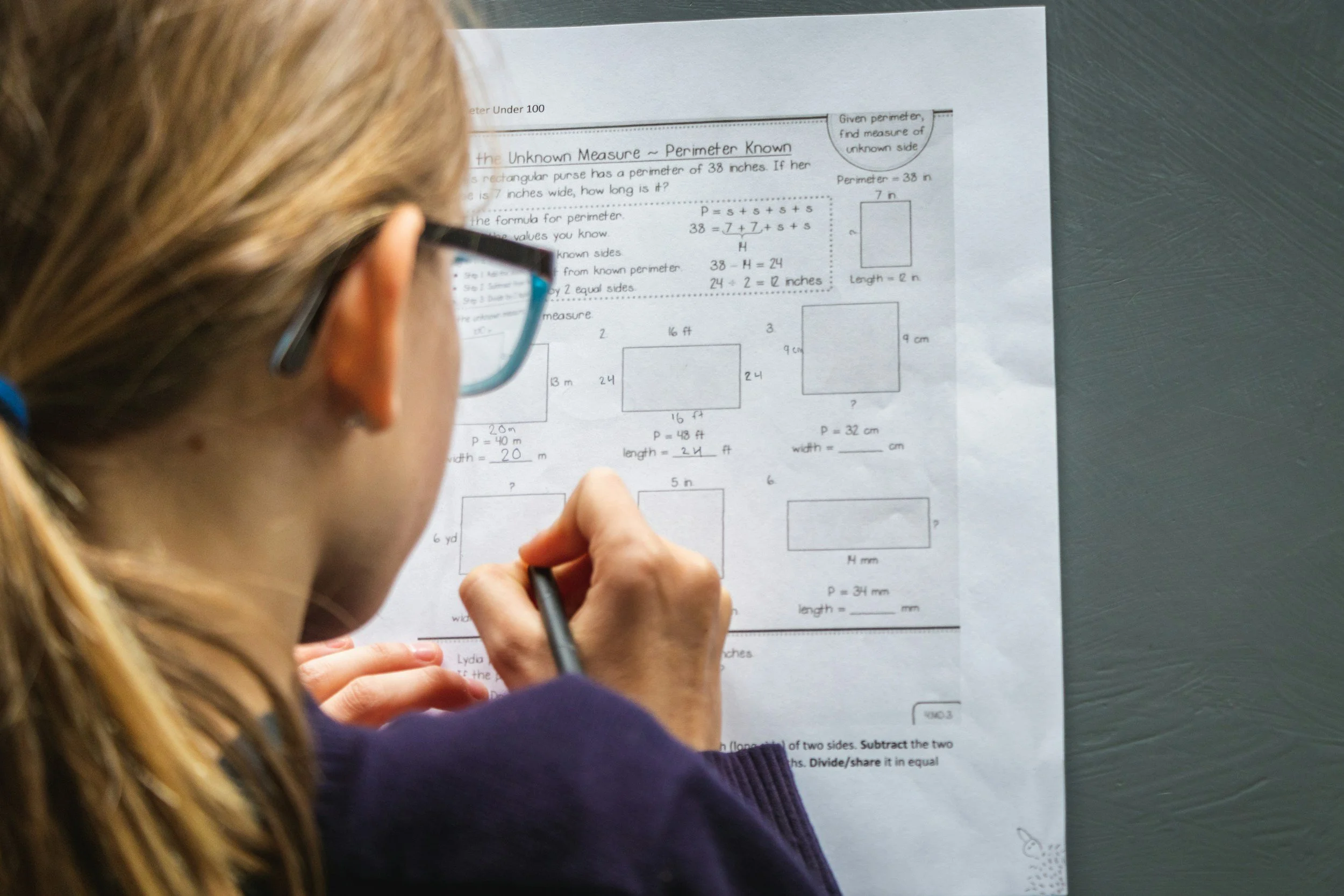
Sixth grade math is a big turning point, as kids move from elementary into middle school and start working with ratios, rational numbers, and early algebra. It builds on everything learned in fifth grade, but expects more independence and abstract thinking along the way. Knowing what’s coming can make it easier to support your child through the shift.
In North Carolina, sixth grade math follows the NC Standard Course of Study, which spells out exactly what students should master by year’s end. This guide walks through the key skills your child will cover, plus how to help keep them on track at home.
Many parents notice that middle school math moves faster than elementary math did, with less repetition and more new vocabulary introduced at once. A little extra awareness now can help your child feel confident instead of overwhelmed as the material builds.
Ratios and Rational Numbers 🔢
Sixth graders dive into ratio reasoning, learning to compare quantities and understand how two amounts relate to each other. They also study common factors and multiples, which lay the groundwork for working with fractions and ratios more fluently.
Alongside this, students build fluency with rational numbers, including whole numbers and decimals, while strengthening the fraction skills they started developing in earlier grades.
Ratio language shows up everywhere in sixth grade, from recipes to maps to unit pricing at the grocery store. Students practice using ratio tables and simple equations to solve real world problems, which helps the concept feel practical rather than abstract.
Negative Numbers and the Coordinate Plane ➖
Sixth grade also introduces negative numbers in a more formal way, including how to compare and order them on a number line. Students learn that negative numbers describe real situations, like temperatures below zero or money that is owed.
Expressions and Equations ✏️
This is often a child’s first real introduction to algebra. Students learn to write and reason with numerical and algebraic expressions, translating word problems into mathematical language.
They also begin solving basic equations, connecting these new skills to real-world situations so the math feels less abstract and more useful.
Students also learn to identify equivalent expressions and use properties of operations to simplify them. This skill becomes especially important in seventh and eighth grade, when equations grow more complex.
Area, Surface Area, and Volume 📐
Geometry takes on more depth in sixth grade, starting with finding the area of triangles and quadrilaterals using formulas and reasoning about shapes.
Students then extend this knowledge to three dimensions, calculating the surface area and volume of prisms and pyramids.
These geometry skills are often taught through hands-on activities, like building nets of three-dimensional shapes out of paper. Seeing the math in a physical form can make abstract formulas click for kids who learn best by doing.
Statistics and Data 📊
Sixth graders learn to ask statistical questions and understand that data can vary, which is a new way of thinking about numbers for many kids.
They also work with univariate numerical data sets, learning to describe and summarize data using measures like center and spread.
Students also start creating and interpreting dot plots, histograms, and box plots to visualize data sets. These tools help them describe patterns instead of just calculating single answers, which is a shift in thinking that takes practice.
How to Know if Your Child Is On Track 📋
If your child can confidently work with ratios, solve simple equations, and find the area or volume of shapes, they’re likely on pace for sixth grade math. Struggling with these core skills by mid-year is often a sign that some extra support could help.
For a full breakdown of expectations, the NC DPI 6th Grade Math Parent Guide is a helpful resource straight from the state.
It also helps to watch how your child talks about math homework. If they can explain their reasoning out loud, even in simple terms, that is usually a strong sign they understand the material rather than just memorizing steps.
Building Good Math Study Habits 📚
Success in sixth grade math isn't just about understanding new concepts—it's also about developing strong study habits. As students transition into middle school, they're expected to take more responsibility for completing assignments, staying organized, and reviewing material outside of class.
Encourage your child to set aside a regular time each week for math practice, even if they don't have homework. Reviewing class notes, working through a few extra practice problems, or using educational math websites can reinforce what they're learning in school. When students practice consistently, they're more likely to retain new skills and feel confident when new topics build on previous lessons.
It's also helpful to remind your child that making mistakes is part of learning math. Working through an incorrect answer and understanding why it happened often leads to a deeper understanding than getting every problem right the first time.
Preparing for Seventh Grade Math 🚀
Sixth grade lays the foundation for many of the concepts students will encounter in seventh grade and beyond. Skills like ratio reasoning, solving equations, working with negative numbers, and analyzing data become even more important as students begin tackling more advanced algebra and geometry topics.
By the end of sixth grade, students should feel comfortable solving multi-step problems, explaining their mathematical reasoning, and applying what they've learned to real-world situations. These abilities help them succeed not only in future math classes but also in science, technology, and other subjects that rely on critical thinking and problem-solving.
If your child finishes sixth grade with a solid understanding of these core concepts, they'll be well prepared for the increased pace and complexity of seventh grade math. Consistent practice, asking questions when needed, and building confidence throughout the year can make that transition much smoother.
Get Extra Support with Middle School Math Tutoring 🎯
Middle school math can feel like a lot all at once, especially with new algebra concepts and multi-step problems. Our tutors help students build confidence with these skills through personalized, one-on-one support. Sessions are tailored to your child’s specific needs, whether that means catching up on a tricky topic or moving ahead with confidence.
Explore our middle school math tutoring services:
Ready to Help Your Sixth Grader Succeed? 🚀
Whether your child needs help with a specific topic or ongoing support throughout the year, we’re here to help them build a strong math foundation.
Book a tutoring session today:
